
Zopiclone Dosage Guide
Educational information about common Zopiclone doses, factors that may influence prescribing decisions, and important safety information.
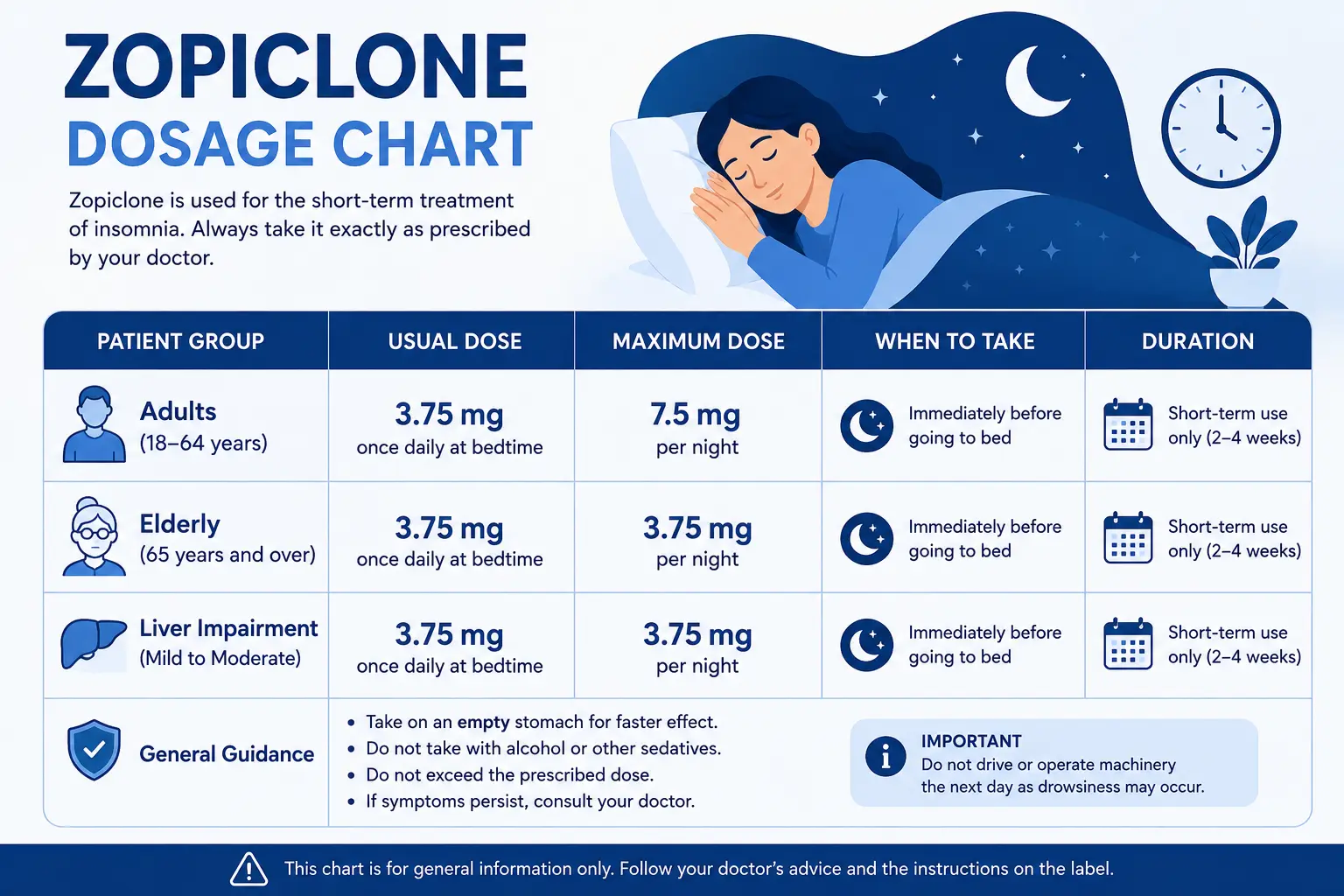
What is Zopiclone?
Zopiclone belongs to a group of medicines commonly known as Z-drugs. It is prescribed for the short-term treatment of insomnia and works by affecting brain activity to help promote sleep.
- Peak blood concentration: approximately 0.5–2 hours
- Average half-life: around 5 hours
- Common prescribed strengths: 3.75 mg and 7.5 mg
- Introduced into clinical practice in the 1980s
Factors That May Influence Dosage
- Age
- Liver function
- Kidney function
- Body weight
- Other medicines
- Existing medical conditions
- Individual response to treatment
The appropriate dose should always be determined by a qualified healthcare professional.
Common Zopiclone Strengths
| Strength | General Information |
|---|---|
| 3.75 mg | Often used as a lower-strength option, particularly where a lower dose is considered appropriate by the prescriber. |
| 7.5 mg | Common prescribed adult strength for short-term treatment of insomnia when considered appropriate by the prescriber. |
| Higher doses | Higher doses may increase the risk of side effects and should only be used if specifically prescribed. |
Dose vs Dosage
Dose: the amount of medicine taken at one time.
Dosage: the amount and frequency of medicine taken over a period of time according to the prescribed regimen.
Possible Side Effects
- Drowsiness
- Bitter or metallic taste
- Dry mouth
- Dizziness
- Reduced alertness the following day in some people
Frequently Asked Questions
How long does Zopiclone take to work?
It is generally taken shortly before bedtime and begins to work within a relatively short period for many people.
Can everyone take the same dose?
No. The appropriate dose depends on individual factors and should be determined by a healthcare professional.