
Zopiclone Side Effects
An educational guide to possible side effects, safety considerations and when to seek medical advice.
Overview
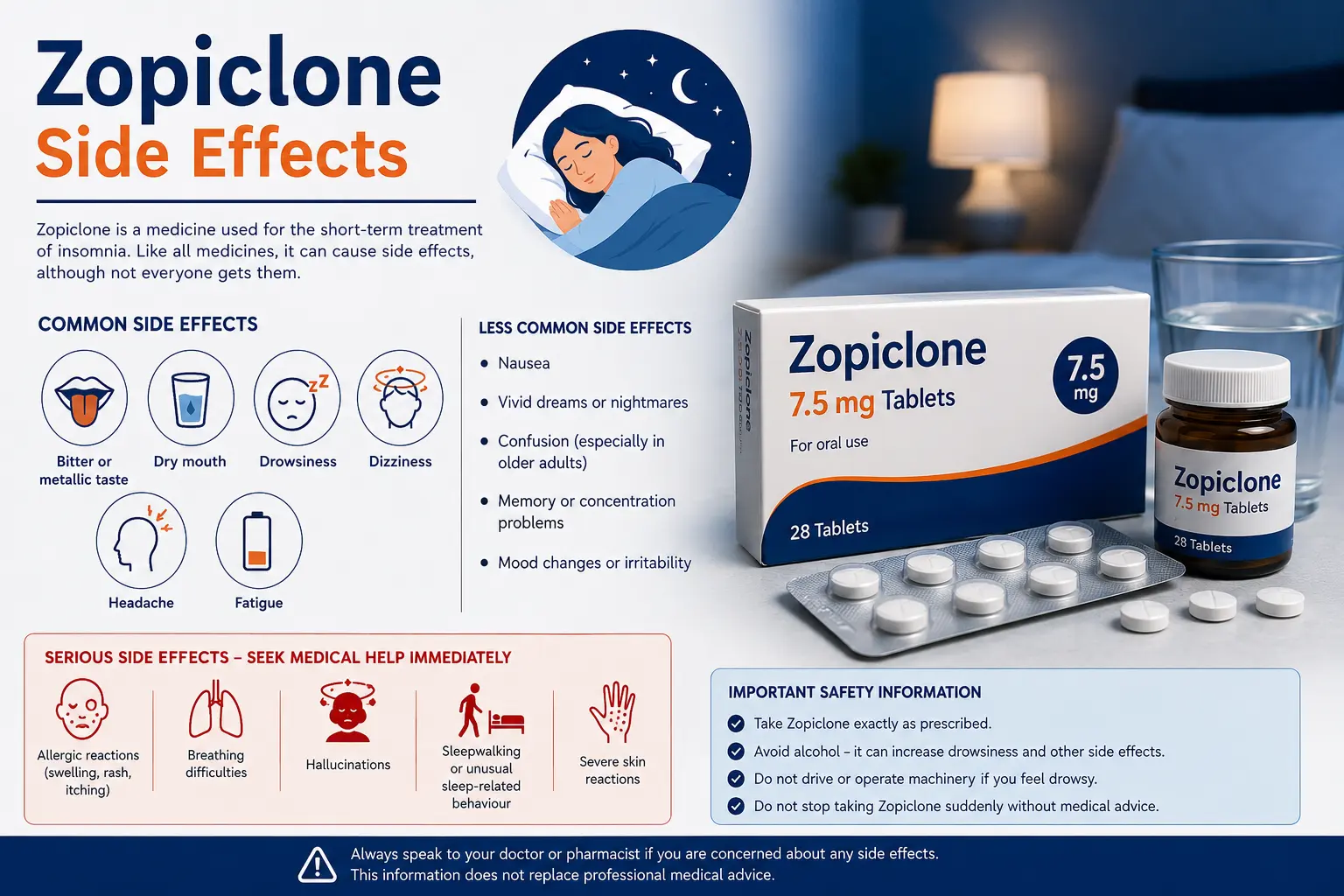
Zopiclone is a prescription medicine used for the short-term treatment of insomnia. Like all medicines, it can cause side effects, although not everyone experiences them. The likelihood and severity of side effects can vary depending on age, medical history, liver function, kidney function, other medicines and individual response to treatment.
Common Side Effects
One of the most commonly reported side effects which usually disappears after treatment ends.
Some patients notice reduced saliva production after taking Zopiclone.
Sleepiness may continue into the following morning, particularly if you have not had a full night’s sleep.
Light-headedness may occur, especially when standing up quickly.
Mild headaches have occasionally been reported during treatment.
Some people may feel tired or less alert during the following day.
Less Common Side Effects
- Nausea
- Vivid dreams or nightmares
- Confusion (more common in older adults)
- Memory problems
- Irritability or mood changes
- Difficulty concentrating
Serious Side Effects
Seek immediate medical attention if you experience:
- Difficulty breathing
- Swelling of the face, lips or throat
- Severe allergic reactions
- Hallucinations
- Sleepwalking or unusual sleep-related behaviour
- Severe skin reactions
Reducing the Risk of Side Effects
| Recommendation | Why It Matters |
|---|---|
| Take only as prescribed | Helps reduce the risk of side effects and dependence. |
| Avoid alcohol | Alcohol increases sedation and next-day drowsiness. |
| Allow enough sleep time | Reduces the likelihood of next-day impairment. |
| Tell your prescriber about other medicines | Some medicines interact with Zopiclone. |
Frequently Asked Questions
Does everyone experience side effects?
No. Many people take Zopiclone without experiencing significant side effects.
When should I seek medical advice?
If side effects become severe, persistent or you develop signs of an allergic reaction, seek medical advice immediately.
References
- NHS Medicines Information
- Electronic Medicines Compendium (eMC)
- British National Formulary (BNF)
- MedlinePlus
- National Center for Biotechnology Information (NCBI)
Last Updated: 2026